
You have no doubt been exposed to all the “fair share” rhetoric we have been inundated with for six years. You may even believe somehow the wealthy in America are just fat cats who sit back and magically become wealthy.
In fact, the vast majority of the high income Americans earn their money from wages, operating a business and by investing, and for most people all that takes years to accomplish.
The issue we should focus on is not inequality, but why more Americans are not, can not or don’t want to follow these leads. For all but the severely disadvantaged, these sources of wealth are available to anyone.
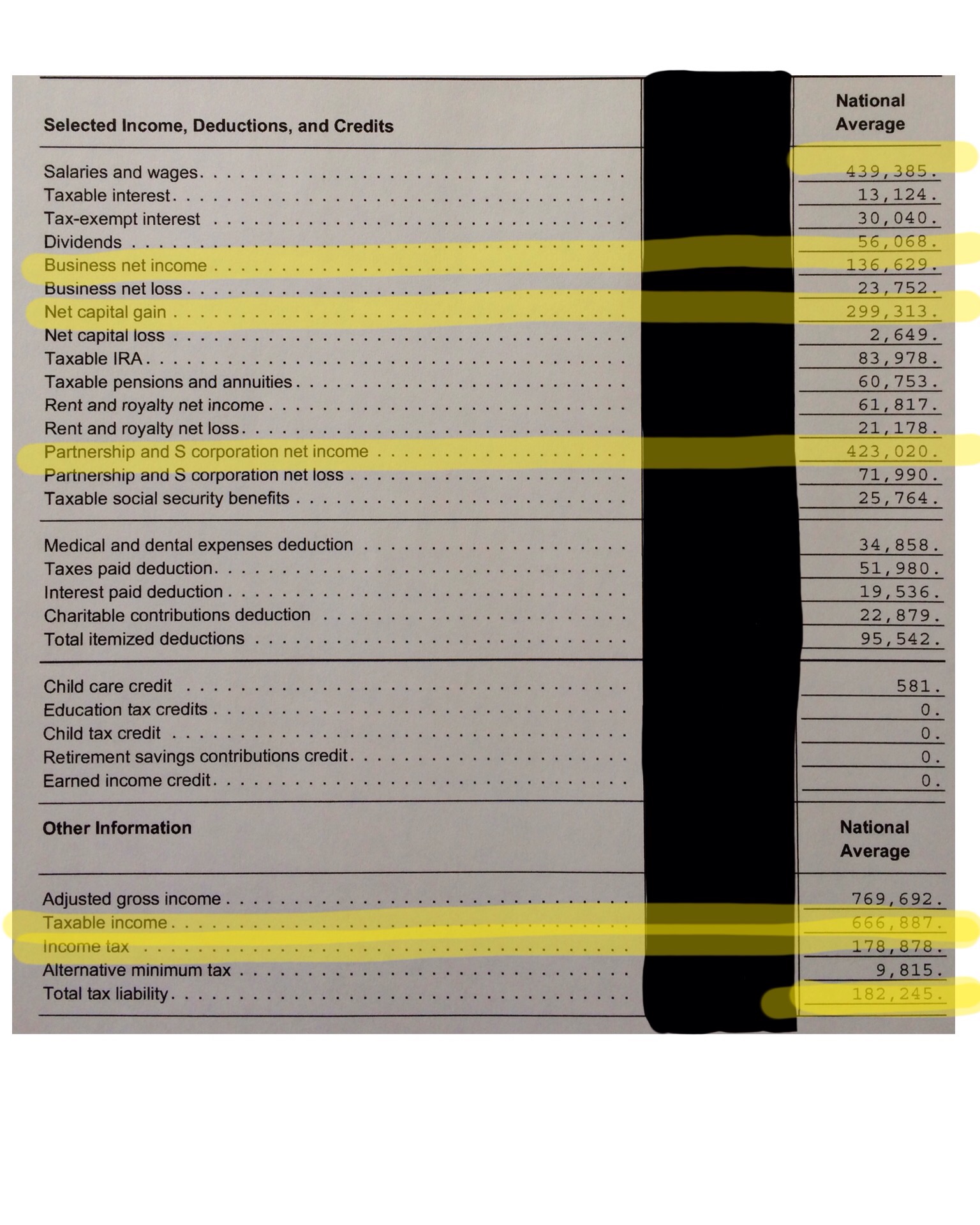
Take a look at the national averages for Americans with household incomes of $250,000 or more. These families makeup between 2% and 3% of all households. While $250,000 is a lot of money most Americans would love to earn, it is not “wealthy” in many parts of the Country, but rather upper middle class. On average this group pays 23.6% of its adjusted gross income in federal tax or 27.3% of taxable income, both considerably higher than the well touted 15%.


 QUINNSCOMMENTARY
You have valid points, but your argument seems to assume a stable middle class. Rather aren’t their families constantly moving up while others are entering the workforce? When I entered the workforce out of high school I was the lowest paid person among 15,000 employees, but I didn’t stay in that position. Over the years I gradually moved up. That opportunity was available to all, that is moving up. On the other hand on the day I retired forty-eight years later there was a person in the mail room where I started who was there three years before me. He was then 72 years old. I still maintain there there are very, very few people who absolutely have no opportunity to move ahead, that is the cannot group.
LikeLike
“The issue we should focus on is not inequality, but why more Americans are not, cannot or don’t want to follow these leads. For all but the severely disadvantaged, these sources of wealth are available to anyone.”
I think the keyword may be cannot. The median (middlemost) household income nationally is $53’046.00 which means a full half are below. By State the median varies between $70’000.00 to $31’000.00 with the highest in the high tax and high cost of living states. For a great many, most all their income is used for non-discretionary day to day expenses which doesn’t leave much for saving and investing.
In theory all these categories of income are available to everyone but in reality I’m not so sure. Using your example of the above $250’000.00 cohort, 57% of income was from salary (earned income). I would think that the average middle class household would be a much higher percent of income from salary for which they must pay employment taxes at a higher ratio of tax to income than the above 250K folks. The above $250’000.00 cohort receives 39% of income from capital gains (unearned income). For most middle income people the only capital gain they receive is within their IRA or 401 K which won’t be available until they are 55 and at that point it becomes regular income taxed at their highest marginal rate, not at the advantaged capital gains rate. 7% of income in your example is from dividends (unearned income). Again, most middle class people own stocks, if any, only in retirement funds.
I don’t think it’s only the severely disadvantaged who can’t take advantage of all these sources of income. I agree with your premise that people should strive to increase their income and save more but it’s only possible if it’s possible.
LikeLike