We can’t control what others do and we can’t stop misfortune from striking. But we can control our own actions. Those who are financially prudent will most likely enjoy success, even if events don’t always go their way.
Bullying, bargaining in bad faith, seeking only victory at the expense of others loss is the strategy of the day.
It is not making America great. It undermines our society, our culture, our values and our constitution.
Excerpt from Project-Syndicate:
Motivation is easily disguised. But if one has a long enough history of saying one thing and doing another, an inference of bad faith is reasonable.
In Trump’s case, we need only recall his record of bad-faith dealing, going as far back as the construction of his Taj Mahal Casino in Atlantic City, where his failure to pay $69.5 million owed to 253 subcontractors bankrupted many small businesses. Similar accounts have plagued many of his enterprises, including the Trump International Hotel, Trump Tower, Trump National Doral Miami, Trump University, Trump Shuttle, Trump Steaks, Trump Vodka, and Trump Ice.
While Trump’s reputation for bad-faith dealing precedes him, since returning to power he has broken free of the rule-based constraints intended to rein in such behavior.
Consider his recent “dealmaking” with some of America’s largest and richest law firms. To date, nine firms, facing a range of punitive measures – from revocation of security clearances to barring from government contracts and even government buildings (including federal courtrooms) – have agreed to provide a total of $940 million in pro bono legal services for pro-Trump causes. Others have chosen to challenge Trump’s coercive executive orders in court, with four securing rulings that block or nullify them.
So why did nine firms, staffed by America’s best and brightest lawyers, capitulate without a fight?
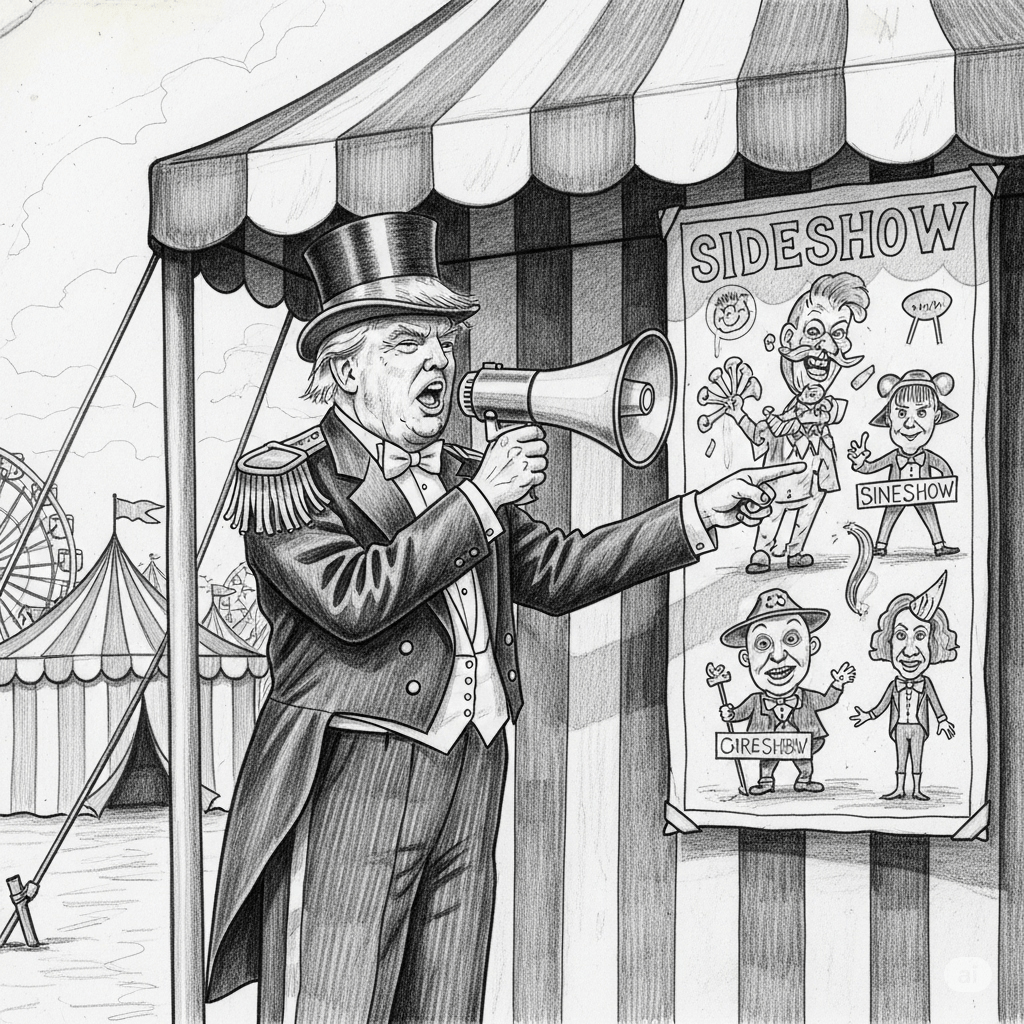
This is the Greatest Show on Earth
Their likely rationale reflects an uncomfortable truth: being on the right side of the law is no longer enough. Many of America’s top lawyers acceded to naked coercion because they concluded that the Trump administration, having thoroughly subordinated federal law enforcement to the president’s will, could always find a way to punish them. In short, they realized they no longer enjoyed the safeguards ordinarily provided by the rule of law.
by
Richard K. Sherwin, Professor Emeritus of Law at New York Law School, is a co-editor (with Danielle Celermajer) of A Cultural History of Law in the Modern Age(Bloomsbury, 2021).


 QUINNSCOMMENTARY