
People who engage in this behavior are often described as using “whataboutism” (or “whataboutery”), and it’s a classic form of deflection or the tu quoque fallacy.
What it is
• Whataboutism: Instead of addressing the accusation or taking responsibility, the person immediately pivots to “But what about [someone else / you / another group] who did [similar or worse thing]?”
• It’s a rhetorical tactic to dodge accountability, shift focus, or muddy the waters rather than engage honestly.
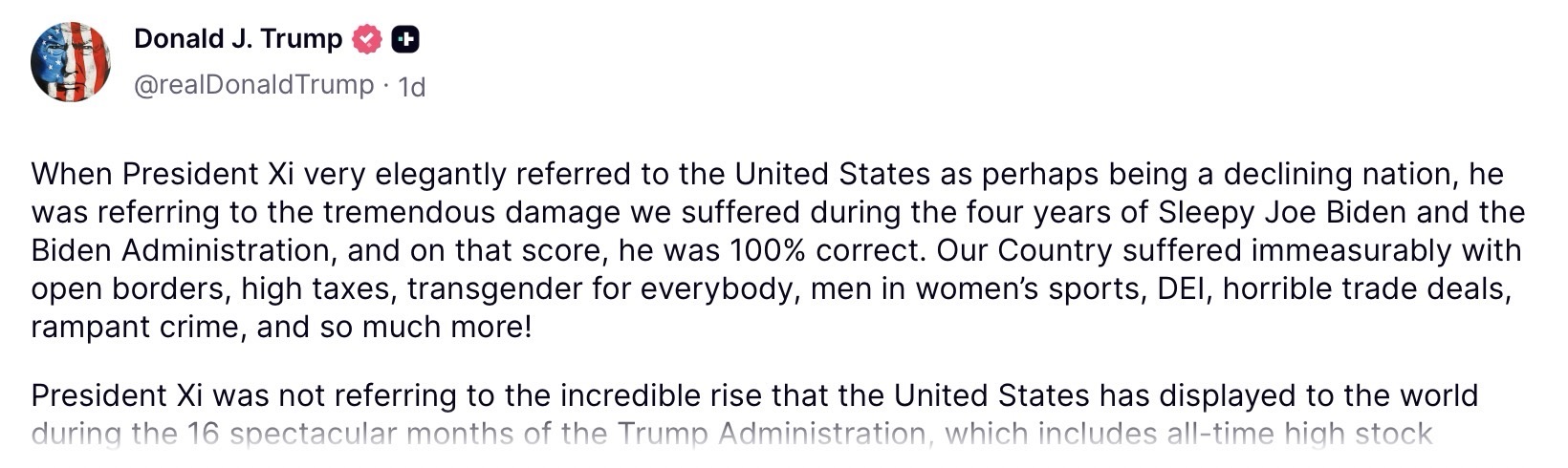
Common types of people who do this habitually
• Defensive or low-accountability personalities: They struggle with criticism and use deflection as a coping mechanism to protect their ego.
• Narcissists or those with strong narcissistic traits: A frequent go-to is blame-shifting, projection, or DARVO (Deny, Attack, Reverse Victim and Offender). Admitting fault feels like a threat to their self-image.
• Manipulators / gaslighters: They use it strategically to confuse the accuser, erode their confidence, or maintain control in relationships.
• Tribalists / ideologues (common in politics, online debates, sports fandom, etc.): Loyalty to “their side” matters more than truth, so they reflexively point to the other side’s sins (“Yeah, but your party/politician/team did it worse!”).
• Hypocrites: People who apply rules unevenly and get called out, so they highlight inconsistencies in others to justify their own behavior.
• Children / immature thinkers (of any age): This is a developmentally normal response in young kids (“But he hit me first!”), but some adults never outgrow it.
Why people do it
It avoids the discomfort of self-reflection or consequences. Psychologically, it can stem from shame avoidance, poor emotional regulation, or learned behavior from environments where accountability was punished. In groups, it’s reinforced because it rallies supporters and derails productive discussion.
Now you know the rest of the story

 QUINNSCOMMENTARY
The past has no relevance to the behavior of the present. What purpose does it serve? Trump here and now is a blatant liar, he is greedy, self absorbed and most important is out of touch with and cares nothing about what is best for average Americans or their country. His morality and ethics and integrity are abysmal. He has no values to admire. He has been like that his whole life.
What is most amazing is he is so arrogant that he makes no attempt to hide his behaviors and still people support him. He has done nothing to improve the financial state or our country or its people. He has put us at greater risk nationally and globally all while enriching himself. That’s fact, not opinion.
LikeLike
You miss the most important point.
Once the opposition introduces a tactic, why are you surprised that individuals in the other party respond in kind, or even escalate?
Harry Reid, former Senate Majority Leader is a great example. Back when President Obama was having issues getting his nominees through the Senate, Harry changed the filibuster for district court and appellate court judges, and political appointees of the Administration, so that highly partisan judges and agency leaders with left of center legal and political views could be confirmed. In November 2013, then-Senate Majority Leader Harry Reid (D-NV) triggered the “nuclear option” to change Senate rules, lowering the threshold to end a filibuster. By a 52-48 vote, Democrats altered Senate precedent to require only a simple majority (51 votes) instead of a supermajority (60 votes) to advance executive branch and lower-court judicial nominees.
He triggered a later response by Mitch McConnell in 2017. Senate Republicans removed the filibuster for supreme court justices during the nomination of Justice Neil Gorsuch, so that only a simple majority vote is needed to confirm. As a result, all federal judge/justice nominees and all political appointments can be confirmed strictly on party-line votes. Kash Patel, Pete Hegseth, Ketange Brown Jackson, anyone?
How about Harry Reid’s lies during the 2012 presidential campaigns. He specifically lied about Mitt Romney claiming he paid no income taxes for a decade. When CNN’s Dana Bash asked Reid in 2015 if he had any regrets about the controversial and unproven allegations, Reid dismissed the criticism by saying, “Well, they can call it whatever they want. Romney didn’t win, did he?”
Compare that to John McCain’s response to a voter four years earlier in October 2008. At a town hall rally in Lakeville, Minnesota, when a voter claimed she could not trust Barack Obama because she heard he was “an Arab,” Senator John McCain took the microphone from her, shook his head, and corrected her by stating:”No, ma’am. He’s a decent family man [and] citizen that I just happen to have disagreements with on fundamental issues, and that’s what this campaign is all about.”
Why are you all surprised how prevalent lies are in politics today?
Or, how about all of the investigations, unprecedented impeachments and legal indictments of Trump during the Biden Administration, and the coming impeachments in 2027 (assuming the Democrats again regain control of the House)? Why are you at all surprised to see the response regarding, for example, Jim Comey?
In terms of legislation, remember that there were no Republican votes for the Patient Protection and Affordable Care Act, no Republican votes for the Inflation Reduction Act of 2022, no Republican votes for the American Rescue Plan Act of 2021. Any surprise that there were no Democrat votes for the One Big Beautiful Bill of 2025?
Yes, you can call this whataboutism, but it is often more a response to a change in tactics, rhetoric, actions, etc. by political opponents.
That said, the idiot ass Trump takes the cake on saying stupid things, filing stupid legal claims, pursuing stupid criminal indictments of political foes, and generally taking stupid executive actions that will prompt and generally won’t survive court decisions. How about the challenge to birthright citizenship? When we get a Democrat president, house and senate, any reason not to assume that they will push to eliminate the Electoral College, make states out of DC and Puerto Rico, pack the supreme court?
The idiot ass Trump could have gotten so much more done that would have survived the next election of a Democratic president – instead of the pendulum swing we saw with Biden, and the coming pendulum swing of the next Democrat president.
LikeLike
Never can I recall anything close to what is going in now. This is way beyond the norm of politics. Way beyond.
LikeLike
agree. BUT your post is what about idk. That is what I am responding to. Why people point at prior actions of predecessors.
LikeLike