
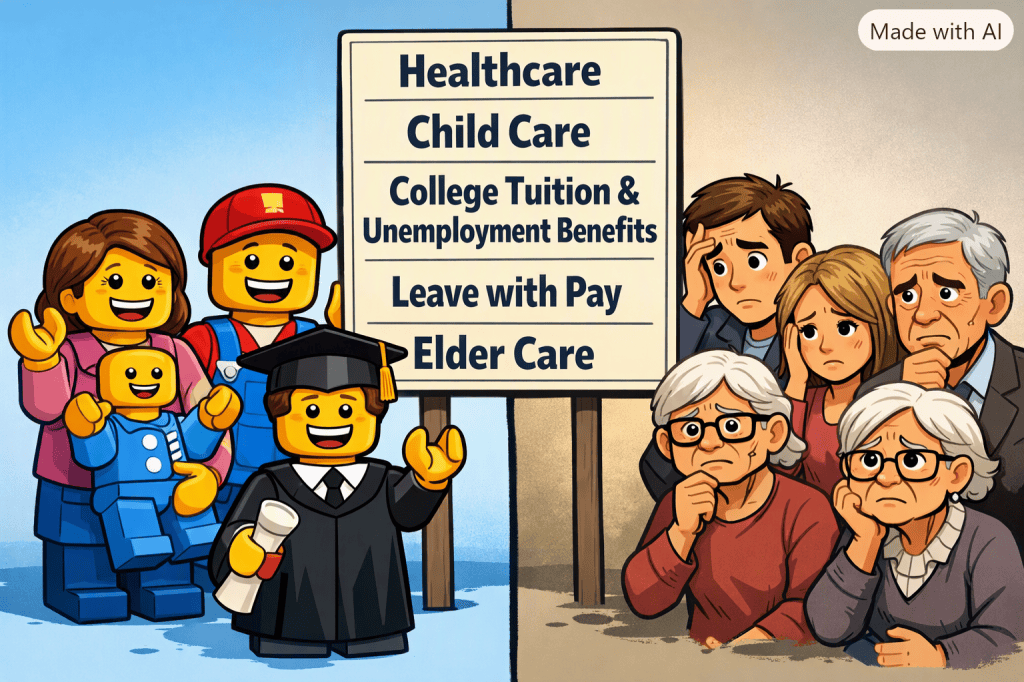
No Scandinavian country has a socialist economy despite high taxes and extensive tax-funded social support programs.
Scandinavian Millionaires, end of 2024 and Billionaires, March 2026
Sweden 490,000 millionaires — 50 billionaires
Denmark 376,000 millionaires — 9 billionaires
Norway 348,000 millionaires —- 17 billionaires
Total 1,214,000 millionaires —- 76 billionaires
Their tax and social programs relieve the burden in individuals.
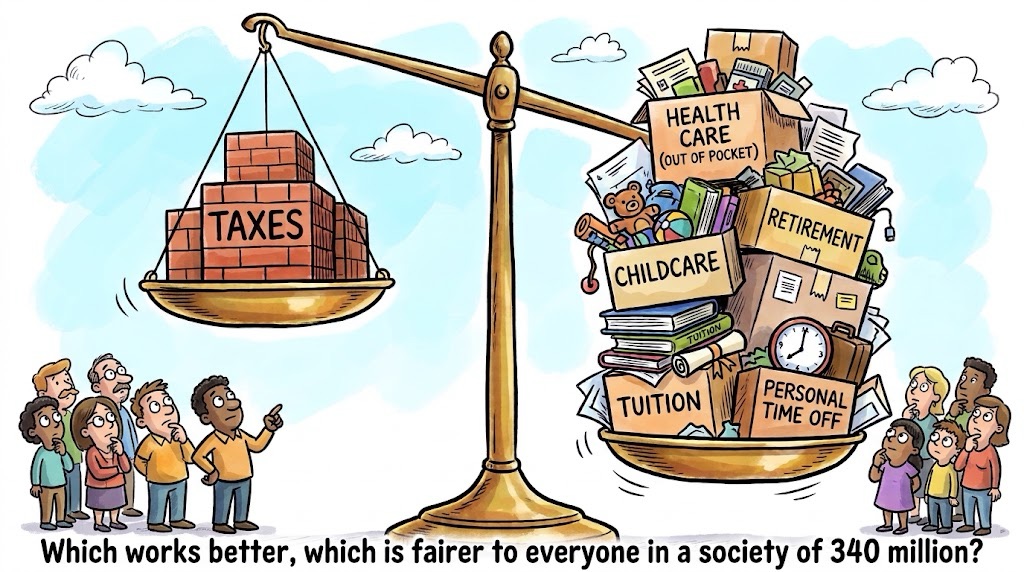
Key Comparisons (OECD Metrics)
International organizations like the Organisation for Economic Co-operation and Development (OECD) measure relative poverty, defined as the proportion of households with disposable income below 50% of the national median household income.
OECD Data ExplorerCountryRelative Poverty Rate (OECD, 50% Median Income Threshold)
Denmark~5.5%
Finland~6.3%
Norway~8.1%
Sweden~8.9%
United States~16.8%
Child Poverty: The U.S. experiences child relative poverty rates around 20%, whereas Scandinavian countries consistently maintain some of the lowest child poverty rates globally (typically 5%–10%).
Elderly Poverty: Scandinavian countries maintain strong universal pension baselines, keeping poverty among seniors low (under 5% in Denmark and Norway), whereas U.S. senior poverty rates vary significantly depending on reliance on Social Security versus personal savings.
USA poverty rates for citizens age 65 and over: Official 9.8% Supplemental 15.4%
Why are there two different figures?
- Official measure (9.8%) counts pretax cash income and compares it with federal poverty thresholds.
- Supplemental measure (15.4%) also accounts for medical expenses, housing costs, taxes, and government assistance.


