
but we have been down this route before. Some of what you see below may sound familiar.
In the early 20th century, Irish, Italian, and Jewish immigrants faced significant prejudice and discrimination from many Americans. This sentiment was rooted in a mix of nativism, economic anxieties, cultural differences, and religious biases.

Here’s a breakdown of common perceptions for each group:
Irish Immigrants: While Irish immigration had been ongoing for decades, the early 20th century still saw lingering negative stereotypes.
- Poverty and Unsanitary Conditions: Many Irish immigrants arrived in poverty, often settling in crowded, unsanitary tenements, which led to accusations of spreading disease and being a drain on society.
- Catholicism: As a predominantly Protestant nation, the influx of Irish Catholics was viewed with suspicion. Fears of papal influence and concerns about their loyalty to the United States were common, fueling anti-Catholic sentiment. The “Know-Nothing” Party in the 19th century had specifically targeted Irish Catholics.
- Perceived “Otherness”: Despite being European, many Irish immigrants were not initially considered “white” in the same way as Anglo-Saxons. They were often caricatured as brutish, alcoholic, and unintelligent.
- Labor Competition: Native-born workers worried that Irish immigrants would take their jobs by working for lower wages, leading to resentment and hostility.
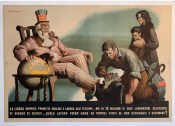
Italian Immigrants: The early 20th century marked a large wave of Italian immigration, particularly from Southern Italy and Sicily, which exacerbated existing prejudices.
- Racial and Cultural Inferiority: Italians, especially those from the South, were often considered racially and culturally inferior and not fully “white” in the early 20th-century racial hierarchies. Their darker complexions and unfamiliar customs contributed to this perception.
- Criminality: Italian immigrants were unfairly associated with organized crime, particularly the Mafia, even though only a tiny fraction of the population was involved. This stereotype was widely perpetuated in the press.
- Catholicism: Like the Irish, Italian immigrants’ Catholic faith was a source of distrust in a largely Protestant nation.
- Unwillingness to Assimilate: Their tendency to cluster in ethnic enclaves (“Little Italies”) was often seen as a sign of their unwillingness or inability to assimilate into American society, rather than a means of support and cultural preservation.
- Labor Competition and Exploitation: Italians often took low-paying, dangerous jobs in construction, mining, and factories, which led to resentment from other working-class groups. They were also exploited by unscrupulous employers and “padroni” (labor bosses).
- Violence: Anti-Italian sentiment sometimes escalated to violence, including lynchings, such as the infamous New Orleans lynching of 1891.
Jewish Immigrants: Many Jewish immigrants in the early 20th century arrived from Eastern Europe, fleeing persecution, pogroms, and poverty.
- “Non-White” Racialization: In official U.S. immigration and naturalization law from 1898 to 1941, Jews were categorized as part of the “Hebrew race” and often considered non-white, especially those from Eastern and Southern Europe. This racialization led to widespread discrimination.
- Antisemitism: Anti-Jewish sentiment was prevalent, manifesting as stereotypes of Jews as miserly, overly competitive merchants, or as having communist sympathies.
- Economic Competition and Stereotypes: While some Jewish immigrants found opportunities in peddling and commerce, others entered industries like garment manufacturing. This sometimes fueled stereotypes about their economic practices.
- Fear of “Old World” Values: Like other immigrant groups, Jews were scrutinized for their “foreign characteristics” and encouraged to abandon their “Old World” values to fit into American society.
- Discrimination: Jews faced discrimination in employment, housing, education, and social acceptance, with “no Jews allowed” notices common in many establishments.
- Internal Divisions: Even within the Jewish community, there were tensions between earlier, more established German Jewish immigrants and the newer, often more Orthodox, Eastern European arrivals. Some established Jewish Americans worried that the influx of new immigrants would increase antisemitism.
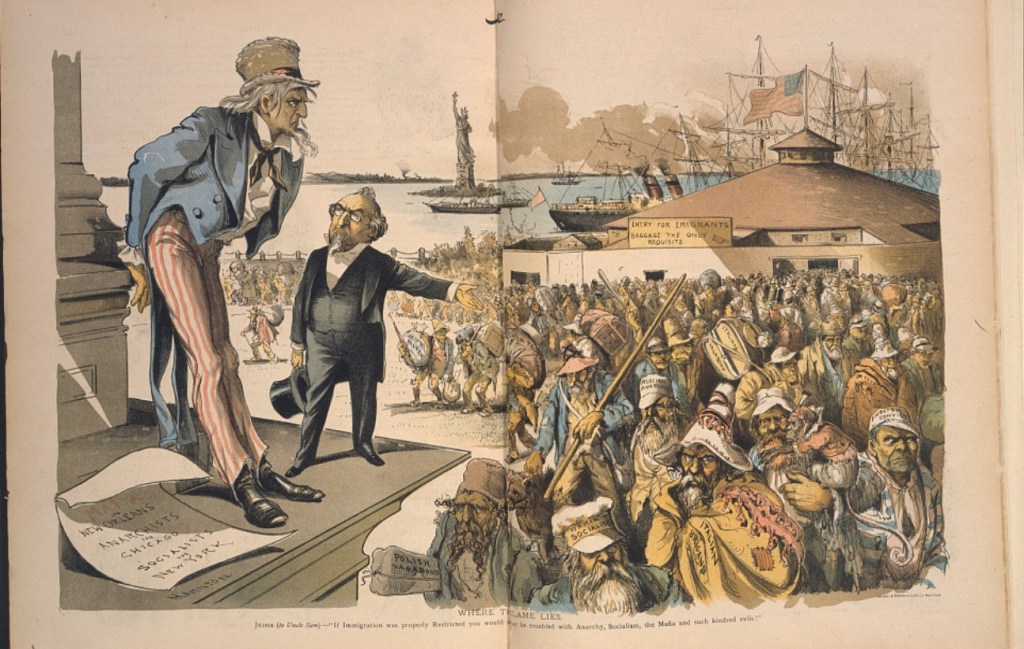
Overall, a common thread was the fear that these immigrant groups, with their distinct cultures, languages, and religions, would undermine “traditional American values” and compete for jobs, leading to widespread nativism and calls for restrictive immigration policies (which eventually materialized in the 1920s with quota acts).

 QUINNSCOMMENTARY
https://www.nytimes.com/2025/09/08/world/americas/trump-migrants-remittances.html
It is apparent that most individuals who crossed our borders in recent years never intended to become Americans. One indication is the surge in money transfers, or remittances to Latin America.
Money transfers to Guatemala, Honduras and other nations have increased in recent months, totaling billions of dollars. Undocumented migrants in the United States say they are sending money to relatives while they can.
I say, follow the money.
Julio Fuentes, a 35-year-old undocumented migrant from Guatemala, sent a large chunk of his savings to his bank account in Guatemala this year — fearing both deportation and a new tax on remittances.
Across several Central American nations money transfers have jumped 20 percent.
These funds may make up a huge chunk of a nation’s economy — as much as a quarter of a country’s gross domestic product, as in Honduras and Nicaragua.
There is now a new 1% tax, taking effect next year, on remittances.
In Honduras, a country of 10 million, remittances rose by 25 percent in the first seven months of this year compared to the same period last year — a $1.4 billion increase.
In Guatemala, with 18 million residents, remittances increased by 20 percent over that time compared to the same period in 2024 — a $2.4 billion spike.
In Nicaragua, where record numbers of people have fled an authoritarian government in recent years, remittances were up 22 percent in the first four months of this year compared to last year — a $350 million jump.
In Haiti, remittances jumped 27 percent in the first half of this year, up nearly $500 million, compared to the same period last year.
Many send money back to their country of national origin as a means of building a home, and to provide a better life, there – anticipating a return to their family (as opposed to investing the money here for the day when the rest of the family comes to America).
LikeLike
Dick, please read this and please post your thoughts in a new blog post. Others, you’ll find a well reasoned discussion here.
thanks, Jack
https://whatthehellisgoingon.substack.com/p/wth-the-facts-about-illegal-migrants
LikeLike
Melting pot worked in the past, and would work today, if we limited immigrants to those individuals who want to come here and become Americans – learn english, renounce their citizenship (not heritage and customs), work, not dependent on government handouts, etc.
To make that a reality, all those who came here by claiming asylum, but were not actually fleeing persecution in their country (that would be 95+% of the immigrants over the past four years, who were economic migrants), all need to leave and get in the queue.
For the past 40+ years, on average, American has admitted about 1MM people. We should be proud of that record of welcoming. However, We need to be able to say who can ome here, and under what circumstances. Yes, that includes students – who should only be admitted if they want to stay and become American citizens.
We also need to be able to send back those who did not abide by our laws.
LikeLike
“… The Trump administration is not just attacking illegal immigrants, but anyone who looks different, and speaks differently or thinks differently. (I disagree). It is making America a very unwelcoming place – to our own peril… but we have been down this route before. Some of what you see below may sound familiar. …”
No, today really isn’t consistent with the early 20th Century. My family lived it. My mom came from Slovakia through Ellis Island in 1925. My paternal grandfather came here 10 – 15 years earlier from Ukraine.
Yes, immigrants always took the crummy jobs, however, jobs that were generally better, much better than what they could secure in their country of birth.
Yes, immigrants were looked down upon.
However, we were a welcoming country, at least until the legal reforms of 1924.
However, there was a big difference. You had to follow the rules. You needed a sponsor. The sponsor had to be able to secure employment in advance.
There was no, repeat, no, and I mean NO government support. There was no welfare (started in the 1930’s), no Social Security (1930’s), no unemployment (Wisconsin first to add in 1932), no Medicare/Medicaid (1964/1965). There was “relief” during the Depression, but, generally, you had to rely on family members during hard times.
Yes, in the early 20th century, Irish, Italian, and Jewish immigrants faced significant prejudice and discrimination from many Americans. Before them, in the 1800’s, the Chinese immigrants were treated even worse. After them, folks from Eastern Europe shouldered the treatment.
I agree that this sentiment was rooted in a mix of nativism, economic anxieties, cultural differences, and religious biases. However, once accepted themselves, the Irish, Italians and others looked down upon more recent immigrants.
Today, LEGAL immigrants aren’t looked down upon. My church supports two refugees from Afghanistan, a mom and her 24/25year old son. They came here in 2022. They are authorized to work in America – and have done so, almost from the first day. They went through the State Department and Homeland Security vetting process.
I don’t know about the mom, but the son clearly came here to be promoted to American citizen … someday. He already has acquired better English speaking skills than my paternal grandfather or maternal grandmother had.
LikeLike
Kash Patel didn’t get the memo.
What is the actual basis for your headline?
LikeLike
Just look at the news on who is being told to leave.
LikeLike
Apparently you’re not. Illegal immigrants are being removed, or asked to leave. This is the critical difference between your post and what is currently happening.
LikeLiked by 1 person
The “melting pot” theory didn’t work out so good, did it? Even now the divisions are there. I notice the Indians tend to populate their own subdivisions and the Hispanics do as well. There is nothing wrong with that as far as I can tell. Different strokes for different folks.
LikeLike