
Michael Dell’s net worth fell more than $20 billion on one day recently as the share price for Dell Technologies tanked.
Shares for the tech company were trading 11.1% shortly before market close, causing the founder’s net worth to drop significantly.
Google co-founder Sergey Brin’s net worth also fell by about $4 billion after Alphabet share prices dropped that afternoon.
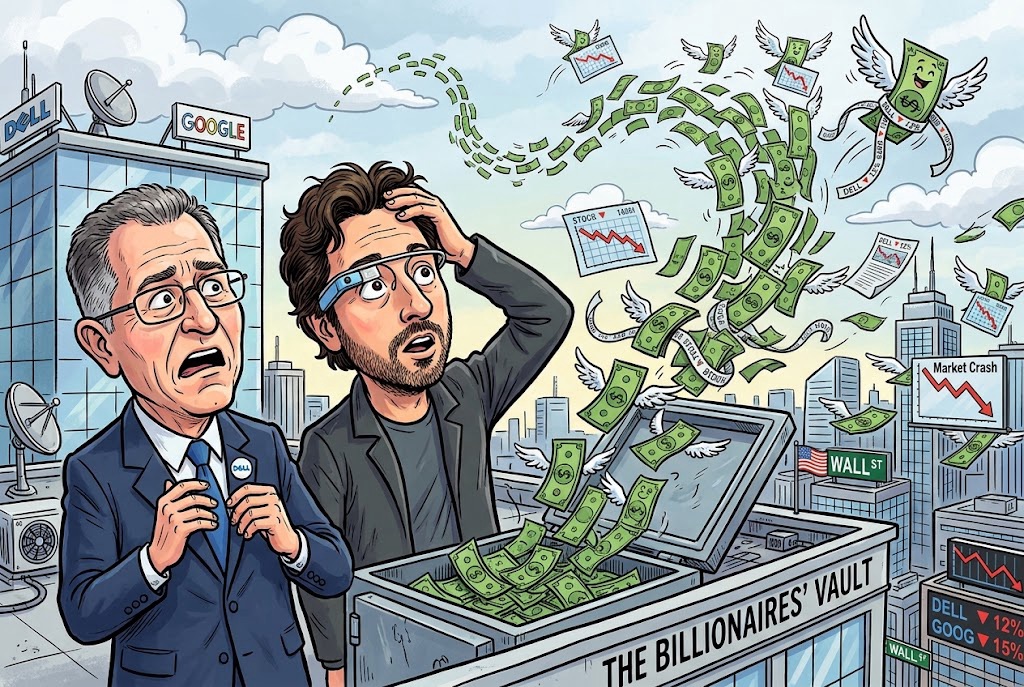
The above illustrates why you don’t make commitments for ongoing programs and promises with a highly variable income source.
For example,
Proponents (including proposals like Sen. Elizabeth Warren’s Ultra-Millionaire Tax) design wealth taxes to cover expansive new commitments:
Paying for universal healthcare coverage.
Extending Medicare benefits to include vision, dental, and hearing.
A major portion of proposed wealth tax revenues is earmarked for education infrastructure
Providing high-quality, subsidized childcare and early education for all families.
Canceling student loan debt, expanding Pell Grants, and funding tuition-free public colleges and universities.
The faulty thinking and risk in all this should be obvious, but it sounds too tempting to many people-just find someone with a lot more wealth than we have and make them pay for what we want 🤑🤑🤑 until they don’t have it anymore.
The five main reasons countries dropped wealth taxes
1. Wealth is difficult to value
Publicly traded shares have observable prices, but private businesses, artwork, family companies, and other assets may not. Governments must decide what they are worth each year, which can lead to disputes and expensive valuations.
2. Wealthy people can move their assets—or themselves
Opponents argue that high-net-worth individuals may move their tax residence, transfer assets abroad, or use tax havens. This can reduce the revenue governments actually collect. The extent of this effect varies, and evidence about international relocation is limited in some settings.
3. People can owe tax without receiving cash
Someone might own a valuable private company but take a modest salary and receive little cash income. An annual wealth tax could force them to sell shares or borrow money to pay the bill, potentially affecting investment and business ownership.
4. Revenue often fell short of expectations
Exemptions, deductions, avoidance, and enforcement costs narrowed the taxable base. Some governments concluded that the money collected did not justify the administrative burden. The OECD identified this as a recurring reason for repeal.
5. Political and economic priorities changed
Governments increasingly favored lower taxes on capital and high earners in several countries. Business groups and wealthy taxpayers also raised concerns about investment, competitiveness, and capital flight. These pressures formed part of the broader shift away from wealth taxation.


