
Excerpts from the New York Times 9-14-26
The Trump administration plans to announce Monday that the United States will no longer limit the planet-warming pollution that power plants pump into the air while burning coal and gas, according to two people familiar with the proposal…
The power sector is the second largest source of carbon dioxide and other greenhouse gases in the United States. This pollution accumulates in the atmosphere, where it traps the sun’s heat, raising temperatures and supercharging extreme weather events around the globe…
President Trump has derided climate change as a “hoax,” and in his second term, the E.P.A. has systematically dismantled policies aimed at slowing global warming that have been criticized as costly by oil, gas and coal companies. The administration has tried to make it easier and cheaper to produce and use fossil fuels, especially to generate electricity that can meet growing demand from artificial intelligence data centers…
Under the Trump administration, the E.P.A. has stopped estimating the public health benefits of reducing pollution in the cost-benefit analyses necessary for clean-air regulations. Instead, the agency has estimated only the costs to businesses of complying with the rules.
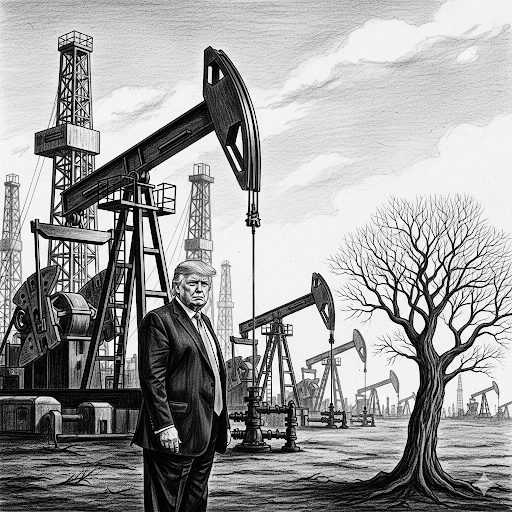
Think about this logic, think carefully. It’s all about money, not the risk to human beings.
In 2026, the Trump administration entered into agreements to reimburse offshore-wind leaseholders in exchange for giving up planned U.S. wind developments.
The most prominent early deal was with the French energy company TotalEnergies: the federal government agreed to pay $928 million to end two offshore-wind lease projects, one off New York and one off North Carolina and instead focus on fossil fuel gas generation in Texas.
The impact of all this will not be known for years, long after Donald Trump is a bad memory.



How to Fake Climate Science and Fool the World
https://substackcdn.com/image/fetch/$s_!aNvF!,w_750,h_440,c_fill,f_auto,q_auto:good,fl_progressive:steep,g_auto/https%3A%2F%2Fsubstack-post-media.s3.amazonaws.com%2Fpublic%2Fimages%2F0c17675a-0eda-4ca2-a181-a198ea567f45_1024x683.jpeg
On August 26, a massive flood and mudflow killed thousands of people along the border of Nepal and Tibet. (Prabin Ranabhat/AFP via Getty Images)
Was the recent disaster in the Himalayas caused by global warming? A study published by an influential group said yes. But its methods turned out to be deeply flawed.
By Roger Pielke Jr.
09.20.26
On August 26, a wall of rock and ice broke away from Langtang Lirung in the Himalayas, resulting in a massive flood and mudflow that killed thousands of people along the border of Nepal and Tibet. Less than a month later, on September 17, an influential organization called World Weather Attribution (WWA), housed at Imperial College London, published a report on the catastrophe along with a press release touting its alarming findings.
Major media outlets ran with it, claiming that WWA’s scientists had concluded that the collapse was the result of human-caused global warming. WWA also asserted that early warning systems were useless against an event of that scale, and called for a rapid exit from fossil fuels to reduce the risks of future such events.
With this supposedly authoritative report in hand, Nepal’s government now plans to take a $20 million claim for compensation to the United Nations for loss and damage due to climate change.
WWA scientists have now repeated this sequence more than 120 times since its founding in 2014: They issue a press release and technical report after a significant weather event, and link the event to climate change. The scientists then purport to explain how much climate change has tilted the odds for such events—three times more likely, 10 times more likely, impossible without climate change, etc. The media around the world then publicize the claims, invariably without challenge.
Over the past months I have replicated 96 WWA studies. Beyond the headlines and under the hood, I can now document how the methods of the WWA project do not actually perform any legitimate analysis that would actually link the weather event to climate change. They simply assume it. (emphasis from BenefitJack)
Further, applying the WWA methods I can link any measure that increases or decreases with time to climate change, whether that trend is weather-related or not. What’s more, I can replace increasing global temperatures with any other measure that is trending up or down, and show how that measure makes the weather event worse or more likely. Did increases in global patent applications make rainfall worse in a 2019 typhoon in Japan? If you use the WWA’s attribution methodology, you can “prove” it—as I did. (emphasis from BenefitJack)
Buried by Snow—and by Shaky Science
Despite the media embrace of the WWA results, there is not only much less there than meets the eye, but the effort risks displacing legitimate climate science, which to date has been assessed periodically and authoritatively by the Intergovernmental Panel on Climate Change (IPCC).
The IPCC has spent more than three decades assessing the data and scientific literature on trends in extreme weather, using two steps.
The first step is detection: whether the long-term statistics associated with a particular type of extreme weather change—a century of hurricane landfalls, say, or peak river flows—can’t be explained by the normal fluctuations in weather over years and decades, called internal climate variability. The second step is attribution: The IPCC starts with a detected change and assesses the possible causes underlying that change—greenhouse gases, aerosols, volcanoes, land use, modes of climate variability, etc.—using sophisticated computer models of the earth’s climate system.
This is the methodology required by the IPCC’s precise definition of “climate change.” The IPCC defines it as a change in the state of the climate, identified by statistical tests and lasting decades or longer. The group treats climate change as a consequence, not as a cause.
I can now document how the methods of the WWA project do not actually perform any legitimate analysis that would actually link the weather event to climate change.
The IPCC judgment that global average temperatures have increased (now approaching 1.5 Celsius above the period 1850 to 1900) and that it is primarily due to human influences first occurred three decades ago, and is one of the most robust conclusions across climate science.
The IPCC has applied the same detection and attribution framework to extreme weather events and produced a much shorter list of detection and/or attributed findings. In its most recent full assessment, in 2021, it reported increases in the intensity, duration, and number of heat wave days at the global scale, and increases in the frequency and intensity of heavy rainfall across most land regions.
For nearly everything else, the IPCC recorded low confidence in detection, in attribution, or in both, including for river flooding, meteorological and hydrological drought, tropical cyclones, winter storms, tornadoes, hail, lightning, and extreme winds.
These conclusions have changed little across successive assessments, which is unsurprising; scientists rarely overturn the findings of many decades within a few years of measurements. But a reader of the daily news would form a very different impression of what mainstream climate science has concluded.
Which, for the WWA, seems to be the whole point.
The alternative facts generated by WWA flip the IPCC’s careful approach around. WWA treats “climate change,” measured as a smoothed record of global temperature, as the only possible cause of any localized trend in rainfall, heat, flooding, or other types of extreme weather.
Contrary to what the IPCC works to explain as an outcome, the WWA uses that outcome as the explanation for everything. In the protocol that WWA teams follow, they explain observed trends in weather: “It is assumed that the main changes in the distribution are due to global warming.”
The A in WWA means attribution, but it really ought to mean assumption.
The WWA methods have no way to evaluate the role of accumulating greenhouse gases in the atmosphere versus ocean cycles, land use, local conditions, and data quality as rival explanations of a local trend. They simply measure how closely the local variable tracks global temperature.
A reader of the daily news would form a very different impression of what mainstream climate science has concluded. For the WWA, that seems to be the whole point.
The awkward result is that any measure that increases or decreases over time—and I mean any measure—will correlate with rising global temperatures. But as we all learned in high school, correlation is not causation.
WWA has not been shy about the fact that it produces its studies to influence the public and to promote climate advocacy. Authors of one of the WWA’s foundational papers openly acknowledged that a primary reason for creating their methods is political: by “increasing the ‘immediacy’ of climate change, thereby increasing support for mitigation.”
The WWA methods are couched in technical descriptions and equations, but at their core, they are trivially simple.
In a WWA tutorial, they use as an example demonstration of their methods the hottest day of each year at De Bilt, a Dutch town with a long temperature record. They first correlate the warmest day of a year at that location with a metric of global warming, and at De Bilt they get a ratio of about 2.8 degrees Celsius warming locally for every 1 degree Celsius globally. They then use that relationship to adjust the historical temperature record at that location down to represent a past climate, say in 1900, and adjust it up to represent the current climate.
The difference between the two reflects a change in climate and the cause of those differences is “climate change.” They repeat the analysis using modeled temperatures, and typically combine the results. Attribution achieved!
WWA moves from correlation to cause by assumption. When you read a media report that a flood or heat wave is X percent more likely, you are seeing the results of creating the two simplistic curves and the assumption that they are different because of climate change, and that is why whatever specific event just happened was so much more likely or intense.
The WWA methods are couched in technical descriptions and equations, but at their core, they are trivially simple.
WWA writes each analysis up in dense, scientific language, posts it without peer review, and issues a press release the same day. Reporters typically work from the press release.
Which brings me back to my own replication of WWA’s methodology. As I mentioned earlier, I can attribute any measure that increases or decreases over time with climate change. Major League Baseball (MLB) home run totals have increased over the decades and thus correlate with increasing global temperature, so I applied the WWA procedure to the annual MLB home run totals and found that the record 6,776 home runs of 2019 would have been impossible in the climate of 1900. Don’t laugh—in 2023 the Associated Press covered a real attribution study (though not by WWA) claiming that climate change was increasing MLB home runs. (Emphasis from BenefitJack)
The method works in reverse as well. WWA published a 2022 study claiming that climate change added $4 billion of the damage from 2019’s Typhoon Hagibis in Japan. I repeated its calculation with one substitution: I used a time series of increasing global patent applications in place of global temperature. I found that “patent change” made the Hagibis rainfall about four times more likely, turning a once-in-28-year downpour into a once-in-seven-year event. I can see the headlines now: Until the world curbs its inventors, Japan faces a rising risk of floods. (Emphasis from BenefitJack)
WWA’s funders are philanthropists: the Grantham Foundation, the European Climate Foundation, and the Bezos Earth Fund, three of the largest backers of climate advocacy in the world.
Attribution science has become embedded in the institutions that governments and the public expect to assess science accurately and without a focus on political outcomes. For instance, the committee that wrote a recent National Academy of Sciences report on extreme event attribution cited WWA’s staff and collaborators more than anyone else.
Remarkably, the Bezos Earth Fund has funded both WWA and that NAS committee. For its next assessment, due by the end of the decade, the IPCC placed nine extreme event attribution scientists on the 20-person writing committee for its extreme events chapter, including two WWA scientists, with its co-founder among the chapter leads.
I wonder if the traditional and reliable detection and attribution framework of the IPCC is now at risk, in favor of using the WWA’s unscientific assumptions.
The WWA’s advocacy campaign has worked brilliantly, of course; 50 percent of Americans now believe policies addressing climate change would reduce the number or severity of the extreme weather events that they individually, or their communities, will experience.
The scientific reality—long understood in mainstream climate science—is that any emissions policy a government adopts today will not noticeably reduce the frequency and intensity of extreme weather, through the lifetimes of children or their children’s children.
There are many good reasons for smart and pragmatic climate policies—including aggressive mitigation of greenhouse gas emissions. However, the prospect of modulating future weather events is not on that list.
LikeLike
I have always been suspicious of the Al Gore promoted global warming agenda. That the climate warms and cools over long periods is a fact but the cause is not human activity. There have been well known periods of cooling and warming before the first coal fired power plant came on line. Trump has blundered in far too many ways but I don’t fault him on this issue.
LikeLike
I’m pretty sure there are warming and cooling cycles over the centuries, but human activity and also added to warming. In addition, beyond warming there is simply pollution affecting health, especially from coal plants. The good news is coal plants are rapidly being decommissioned.
The bottom line since we can’t know for 100% certain, why would we not want to err on being more cautious instead of taking a chance – even if it adds to costs.
LikeLike
I don’t know what to think of climate concerns.
One scientist who reviewed all of the studies and literature, noted:
“Near the turn of the 21st century, several climate scientists believed that rising CO2 was the cause of observed warming and sought to support this by showing that excursions in the Earth temperature were small for the past 2,000 years, with a sudden increase in the 20th century at the same time period when CO2 emissions increased (a so-called “hockey stick” shape to the temperature vs. time plot). To do this, they employed a large number of proxies (such as tree rings) to estimate the Earth’s temperature over the last 2,000 years. Each proxy was compared to the measured temperature during the calibration period (the 20th century), and this relationship was used to convert up to 2,000 years of proxy measurements to estimated temperature. A sophisticated algorithm was used to process the large amount of data from multiple proxies into a yearly average temperature for up to 2,000 years.
Unfortunately, they made several mistakes in the statistical analysis, one of which produced a significant statistical error. This error, in which they standardized the data against the mean during the calibration period (rather than the entire data set) had the effect of almost ignoring most of the proxies, while heavily weighting those few with an increase in the 20th century – thus artificially producing a hockey stick form to the plot of temperature vs. time. In addition, the innate merit of many proxies is dubious. The climate scientists involved appeared to ignore valid criticisms from outside their peer group, and they continued to claim the hockey stick result. Climate scientists also vigorously opposed any suggestion that factors other than CO2 also affected the climate. Climate scientists introduced elements of political influence into scientific discourse by actions such as loading up a thin paper with a large number of authors – publishing votes of confidence rather than scientific results….”
He concluded:
“About 20-25 years ago, many climate scientists felt the need to promote the alarmist view of climate change by claiming the warming of the 20th century was anomalous compared to the previous 2,000 years, and coincident with rising CO2 concentration; therefore, CO2 was the driving force for this warmth. Groups of climate scientists, in frequent contact with one another, acted in concert, seemingly as a community, and did not respond legitimately to various criticisms of their work, and continued to use faulty procedures, promulgating unjustifiable results. We can speculate on their motives. They might have had a true idealistic desire to save the world from what they believed was an impending catastrophe due to global warming, but that does not justify their behavior.”
https://www.igminresearch.com/articles/html/igmin296
I don’t know how to predict our climate future. Since “An Inconvenient Truth”, here’s what we have been up to when it comes to power generation via coal. U.S. coal-fired power plants have declined sharply since 2005 due to cheaper natural gas and renewables, though recent political and demand pressures have slowed retirements. More than 60 percent of the U.S. coal fleet existing in 2010 has retired or scheduled retirement by 2030.
However, I do know that we can bang our head against the wall and curtail productive activity all we want, and it won’t make any difference so long as China and India continue on their current path.
China’s New Coal Power Installations Reach 18-Year High
https://www.forbes.com/sites/katharinabuchholz/2026/02/27/chinas-new-coal-power-installations-reach-18-year-high/
China’s electricity consumption, a key barometer of economic activity, went up 6.8 percent year on year in September, as the country’s economy further recovers, official data showed Wednesday. 2025 figures show installation of almost 70 gigawatts of new coal power capacity more than it took off the grid. The last time this number has been this high was in 2007. China has more projects in the pipeline. Additional data shows that China has a staggering 500 gigawatts of coal power capacity under construction, permitted, pre-permitted and announced … the country’s coal frenzy has still caused available coal power capacity to rise continuously every year. China had commissioned more coal power capacity in 2025 alone than India, the second biggest builder of new coal, had done in the past decade.
Keep in mind that India has significantly expanded its coal-fired power capacity since 2005, reaching over 205 GW by 2022 and maintaining 43 GW of coal plants under active construction to meet surging electricity demand.
The correct answer, to me, is to do that which is cost-effective and efficient with an eye on moderating pollution and greenhouse gas.
That would EXCLUDE offshore wind generated energy – a fools errand compared to many other alternatives, as the fully depreciated cost of offshore wind is double the cost of onshore wind, nuclear, solar, and combined natural gas.
Offshore wind is one of the most expensive ways to generate electricity. No one has EVER proposed to build an offshore wind project without lavish taxpayer subsidies, and the cost to everyday ratepayers is higher than most are willing to pay.
I think Trump is an idiot and an ass – he has missed so many opportunities for favorable action that would have resolved significant issues in a bipartisan manner. He learned that process from his predecessors, Bush II and Obama – neither ever cared all that much about legislation created in a bipartisan fashion.
Bottom line when it comes to climate and energy generation, while we may not have continued with the various climate accords, those would have been ineffective in addressing climate concerns given the activity underway in China, India and elsewhere.
LikeLike
Very good summary BenefitJack and thanks. I knew that climate alarmists were concerned about China, India and probably some other countries but those places have a lot of people to provide for and the need to grow huge economies. They can’t afford to put it all on some windmills and a solar panel on the roof. Nuclear power may help but in the meantime coal is it.
LikeLike